
Begin with support, keep the dental question separate
Thumb or finger sucking can be a source of comfort. It is a normal early-childhood behavior. When a family is concerned about a continuing habit, the conversation can begin with encouragement and the child's perspective, rather than blame.
The ADA describes praising a child for not sucking, offering comfort and involving an older child in choosing an approach. Those principles give a family something useful to discuss together. They do not require the child to earn kindness by succeeding.
Source: ADA: Thumbsucking.
A dental assessment addresses the developing teeth and bite. Supportive participation and that assessment can matter at the same time, while answering different questions.
Two jobs, with different kinds of help
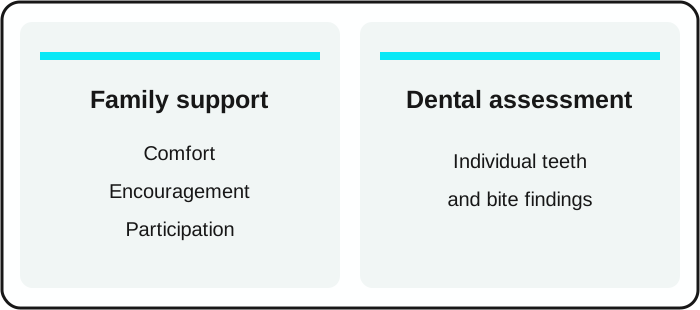
Family support: listen to what feels helpful, recognize effort and make room for the child's voice. A quiet, respectful response can be a choice the family makes together.
Dental assessment: let the clinician explain the individual findings and the reason for any recommendation. A habit name does not supply that explanation.
For example, a child can prefer encouragement in private. Honoring that preference describes how support is offered. It does not tell the family what the clinician will find or whether tooth positions need treatment.
Start with the part you need
- Habits and developing teeth: see why the habit history and a dental finding contribute different information.
- Helpful support: work through encouragement, comfort and older-child participation with practical examples.
- Maya's family example: follow a complete fictional discussion and its meaning.
The existing SMILE-FX® children's check-up guide explains the wider assessment. This guide focuses on the supportive habit conversation.
An individual conversation with SMILE-FX®
Board-certified orthodontists see every SMILE-FX® patient, including follow-up appointments. The practice offers full-service orthodontics with a digitally driven clear-aligner focus.
That clinical responsibility provides a place to discuss an orthodontic concern and understand the individual explanation. General practice capabilities do not establish a particular habit appliance or a habit-treatment program. Read the complete care model and the in-person Miramar visit details.
Sources for this lesson
Sources: ADA: Thumbsucking · AAPD: Developing dentition, 2024 revision in the 2025 manual, pp 500–501